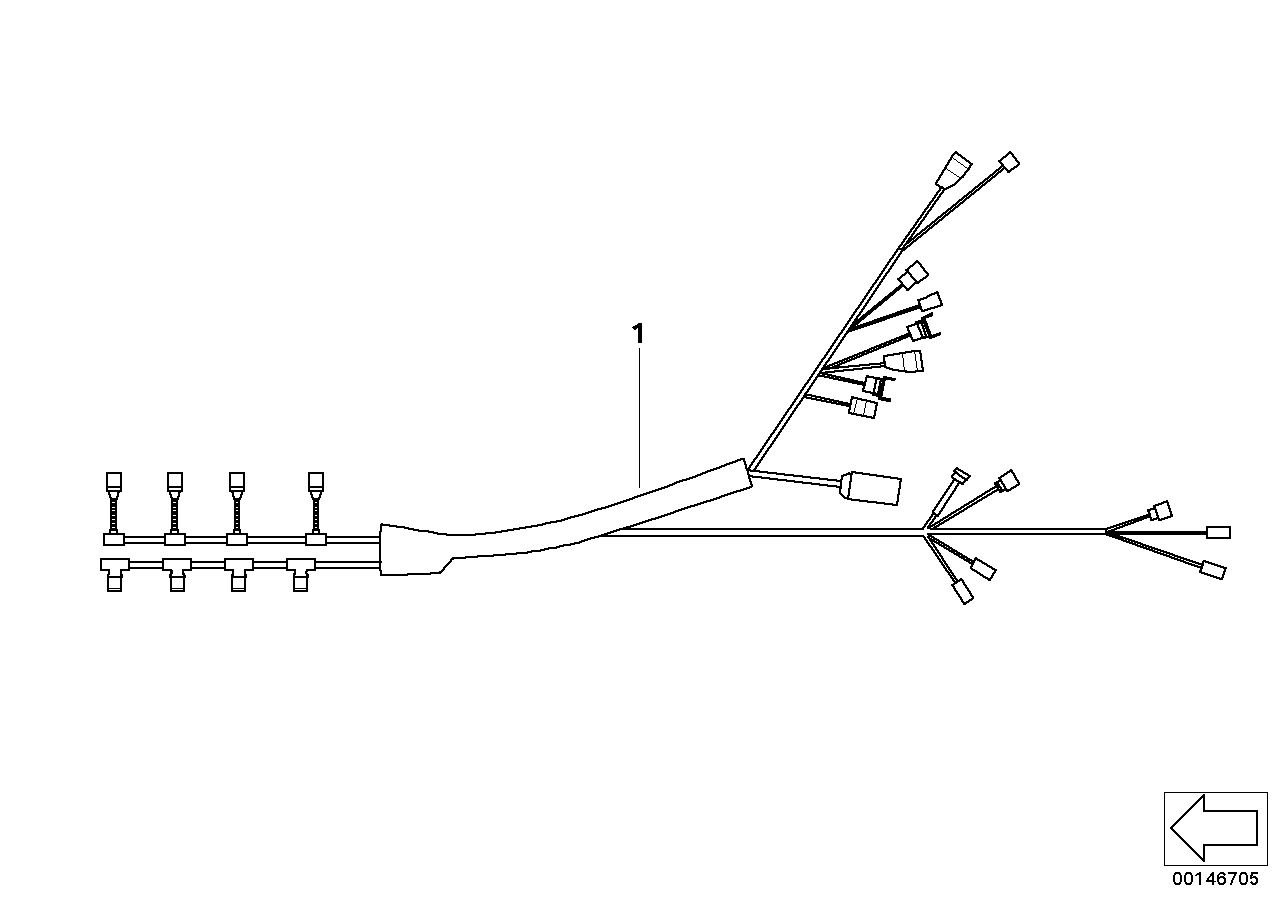
Understanding the wiring of a BMW E90 (2006–2013 3 Series) is a bit like decoding a high-tech nervous system. Whether you’re chasing a "crank but no start" issue or performing an engine swap, having a roadmap of the engine wiring harness is essential.
Here is a comprehensive guide to navigating the BMW E90 Engine Wiring Harness Diagram and what you need to know before you start stripping electrical tape.

1. Overview of the E90 Wiring Ecosystem
The E90 doesn't just have one single "wire." It utilizes a complex network governed by the DME (Digital Motor Electronics)—the engine's brain. Most E90 models (N52, N54, N55 engines) house the DME in a white plastic box located in the rear passenger side of the engine bay (cowl area).
Key Components Connected to the Harness:
Fuel Injectors: Sequential firing controlled by the DME.
Ignition Coils: Direct paths for spark timing.
VANOS Solenoids: Controlling intake and exhaust camshaft timing.
Sensors: MAF (Mass Air Flow), Crankshaft Position, Camshaft Position, and O2 sensors.
Ground Straps: The most overlooked part of the harness that causes 50% of electrical "ghosts."

2. Common Engine Harness Variations
Depending on which engine is under your hood, the wiring architecture changes significantly:
| Engine Code | Configuration | Common Harness Issues |
| N52 | Inline-6 (Naturally Aspirated) | Oil wicking into the Eccentric Shaft Sensor connector. |
| N54 | Inline-6 (Twin Turbo) | High heat causes wire insulation to become brittle near the turbos. |
| N55 | Inline-6 (Single Turbo) | Sensitive MAP sensor wiring and ground failures. |
| M3 (S65) | V8 | Complex ITB (Individual Throttle Body) actuator wiring. |
3. How to Read the BMW Wiring Diagram (WDS)
BMW uses a specific shorthand in their official diagrams. If you are looking at a technical schematic, keep these "color codes" in mind:
RT (Rot): Red (Usually constant power)
SW (Schwarz): Black (Usually switched power or signal)
BR (Braun): Brown (Almost always Ground)
GE (Gelb): Yellow
GN (Grün): Green
Pro Tip: In the E90, the Brown wires are your best friends. If you have multiple fault codes for different sensors at once, check the common ground junction on the engine block or the inner fender.
4. Troubleshooting: The "Big Three" Failure Points
If you are searching for a diagram because your car is acting up, check these three harness-related spots first:
The DME Box Connectors: Water can sometimes leak past the cowl and corrode the large multi-pin connectors. Look for green crust (oxidation).
The Valve Cover Leak: On N52 engines, oil leaks from the valve cover can seep into the Eccentric Shaft Sensor plug, causing limp mode and "internal short" codes.
The Integrated Power Module (IVM): While more common in 5-series/7-series, the E90's power distribution to the harness can be interrupted by blown fuses in the "junction box" under the glove compartment.
5. Tools for the Job
You cannot effectively diagnose an E90 harness with a test light alone. You will need:
Multimeter: To check for continuity and voltage drops.
ENET Cable or K+DCAN Cable: To use software like ISTA+ (BMW’s factory diagnostic tool).
Wiring Depinning Tool: If you need to replace a specific connector without cutting the harness.