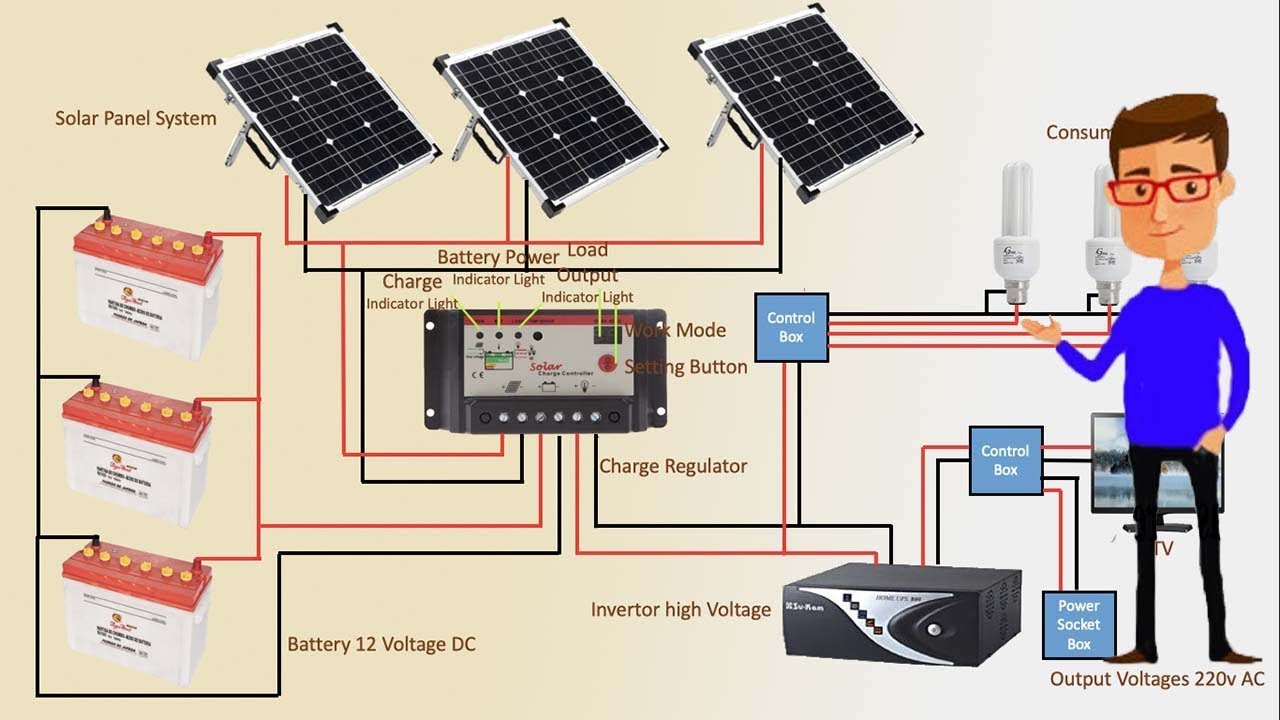
These systems allow homeowners and businesses to generate their own electricity, independent of the grid, and reduce their reliance on fossil fuels. However, installing an off-grid solar power system can be a complex process, requiring careful planning and attention to detail, particularly when it comes to wiring. In this article, we will provide a comprehensive guide to off-grid solar power system installation wiring, covering the essential components, wiring configurations, and best practices.
Introduction to Off-Grid Solar Power Systems
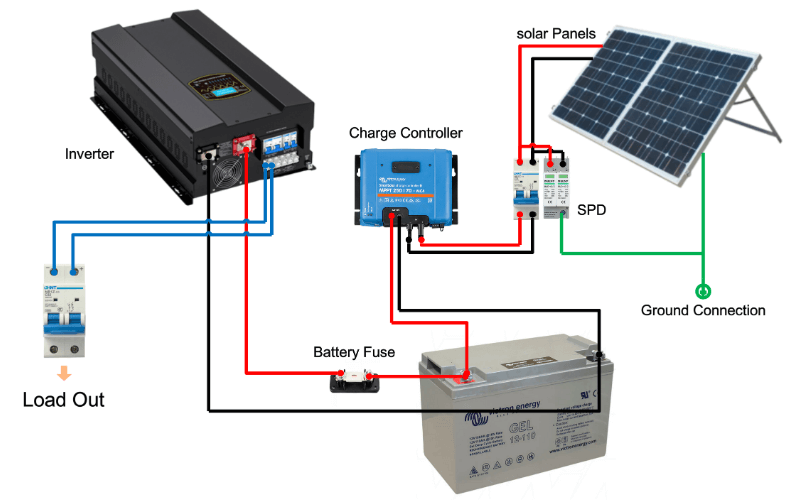
An off-grid solar power system consists of solar panels, a charge controller, a battery bank, and an inverter/charger. The solar panels generate DC power, which is then sent to the charge controller to regulate the voltage and current. The charge controller ensures that the battery bank is charged safely and efficiently. The battery bank stores excess energy generated by the solar panels during the day, allowing the system to provide power at night or during periods of low sunlight. The inverter/charger converts the DC power from the battery bank to AC power, making it usable for household appliances.
Wiring Components
Before diving into the wiring process, it's essential to understand the various components involved:
- Solar Panels: These are the primary source of energy for the system. They generate DC power, which is then sent to the charge controller.
- Charge Controller: This component regulates the voltage and current from the solar panels to ensure safe and efficient charging of the battery bank.
- Battery Bank: This is a group of deep cycle batteries connected in series and parallel to store excess energy generated by the solar panels.
- Inverter/Charger: This device converts the DC power from the battery bank to AC power, making it usable for household appliances.
- AC Panel: This is the main distribution panel for the AC power, which is connected to the inverter/charger.
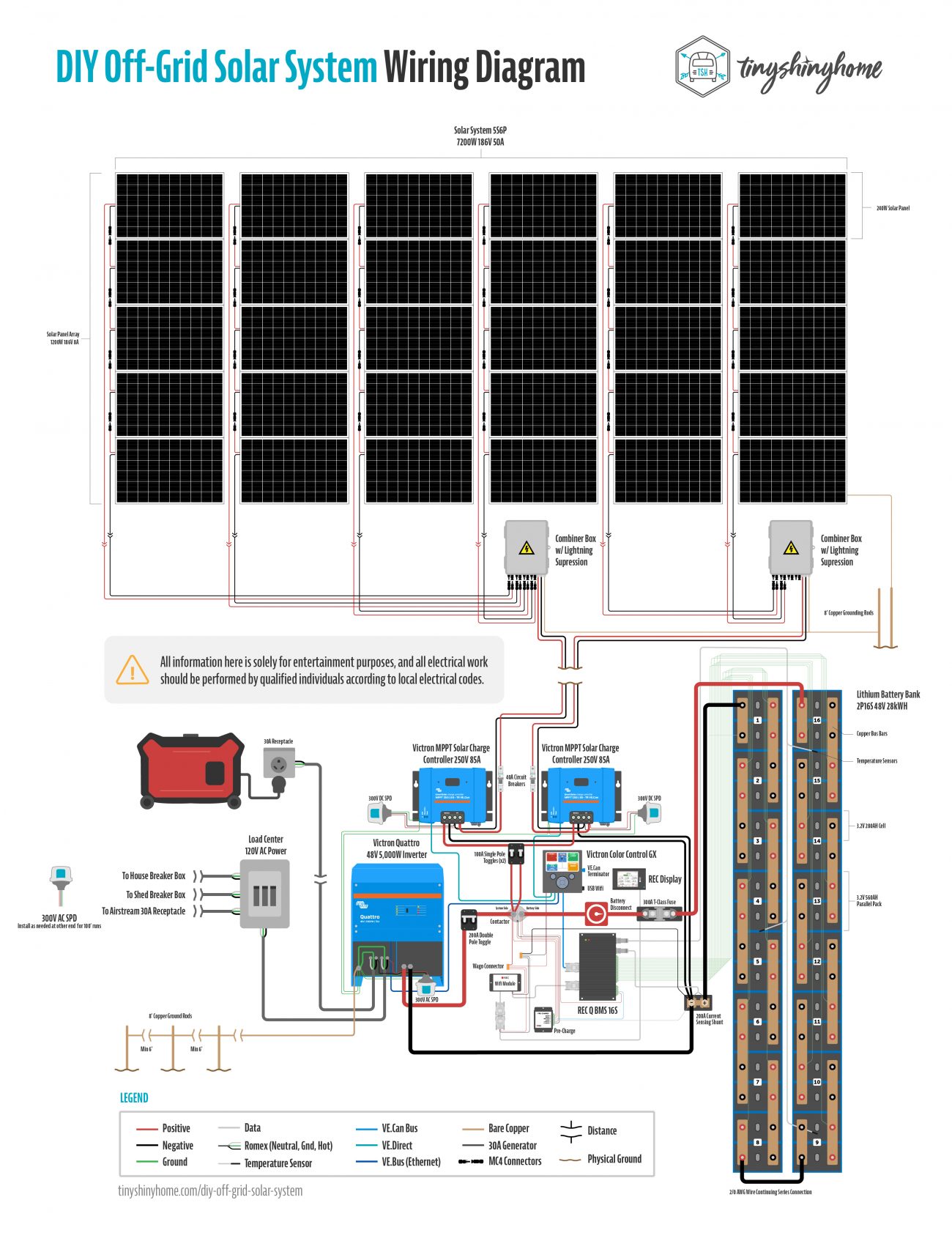
- DC Disconnect: This is a switch that disconnects the DC power from the solar panels to the charge controller.
- Grounding System: This is a critical component that provides a safe path to ground for the entire system.
Wiring Configurations
There are several wiring configurations for off-grid solar power systems, depending on the system size and complexity:

- Series Wiring: This configuration involves connecting the solar panels in series to increase the voltage. The charge controller is then connected to the series string.
- Parallel Wiring: This configuration involves connecting the solar panels in parallel to increase the current. The charge controller is then connected to the parallel string.
- Series-Parallel Wiring: This configuration involves connecting multiple series strings in parallel to increase both voltage and current.

Wiring Best Practices
To ensure a safe and efficient off-grid solar power system, follow these wiring best practices:
- Use the correct wire size: Use the correct wire size to ensure that the system can handle the maximum expected current.
- Use proper connectors: Use proper connectors, such as MC4 connectors, to ensure a secure and waterproof connection.
- Label the wires: Label the wires clearly to ensure that they can be easily identified during maintenance and troubleshooting.
- Keep the wiring organized: Keep the wiring organized and tidy to prevent damage and ensure easy maintenance.
- Ground the system: Ground the system properly to ensure a safe path to ground and prevent electrical shock.
- Use a DC disconnect: Use a DC disconnect to disconnect the DC power from the solar panels to the charge controller.
- Monitor the system: Monitor the system regularly to ensure that it is operating efficiently and safely.
Installation Process
The installation process for an off-grid solar power system involves several steps:
- Assess the site: Assess the site to determine the best location for the solar panels and other system components.
- Design the system: Design the system to meet the energy needs of the household or business.
- Install the solar panels: Install the solar panels, ensuring that they are securely fastened and angled correctly.
- Install the charge controller: Install the charge controller, ensuring that it is properly connected to the solar panels and battery bank.
- Install the battery bank: Install the battery bank, ensuring that it is properly connected to the charge controller and inverter/charger.
- Install the inverter/charger: Install the inverter/charger, ensuring that it is properly connected to the battery bank and AC panel.
- Connect the AC panel: Connect the AC panel to the inverter/charger, ensuring that it is properly configured and connected to the household or business appliances.
- Test the system: Test the system to ensure that it is operating efficiently and safely.
Troubleshooting and Maintenance
To ensure that the off-grid solar power system operates efficiently and safely, regular maintenance and troubleshooting are essential:
- Monitor the system: Monitor the system regularly to ensure that it is operating efficiently and safely.
- Check the wiring: Check the wiring regularly to ensure that it is secure and not damaged.
- Check the solar panels: Check the solar panels regularly to ensure that they are clean and not damaged.
- Check the battery bank: Check the battery bank regularly to ensure that it is properly charged and maintained.
- Check the inverter/charger: Check the inverter/charger regularly to ensure that it is operating efficiently and safely.
Conclusion
Off-grid solar power system installation wiring requires careful planning and attention to detail to ensure a safe and efficient system. By following the best practices and guidelines outlined in this article, homeowners and businesses can install a reliable and efficient off-grid solar power system that meets their energy needs. Regular maintenance and troubleshooting are essential to ensure that the system operates efficiently and safely. With the increasing demand for renewable energy sources, off-grid solar power systems are becoming an attractive option for those looking to reduce their reliance on fossil fuels and minimize their carbon footprint.