The wiring must be sized to handle the maximum current output of the solar panels, and must be protected against overcurrent and short-circuit faults.

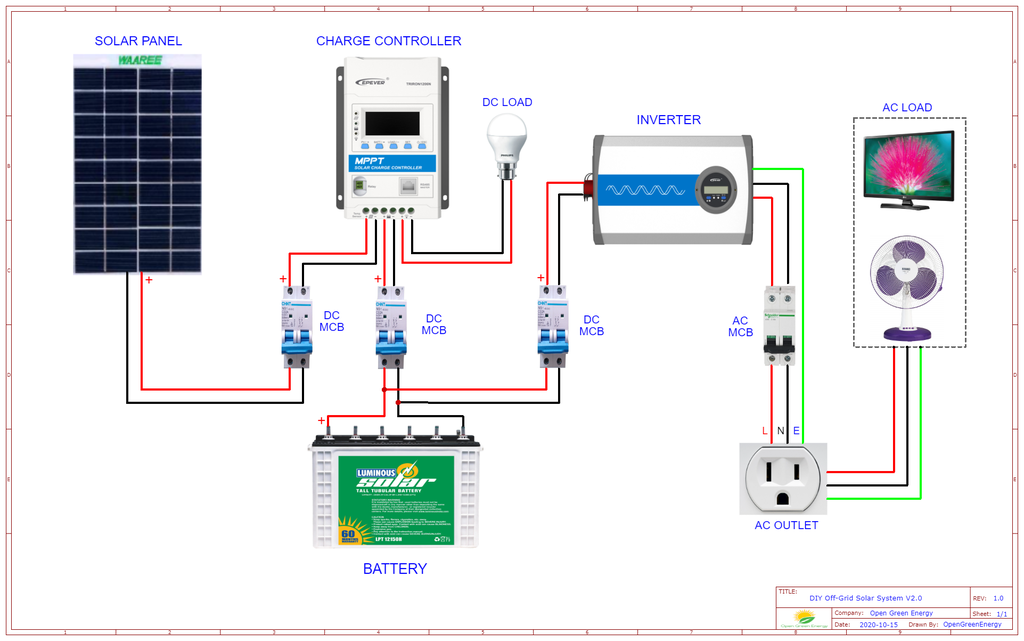
- Charge Controller Wiring: The charge controller is connected between the solar panels and the battery bank, and regulates the flow of power to the batteries. The wiring between the solar panels and the charge controller must be sized to handle the maximum current output of the solar panels, and must be protected against overcurrent and short-circuit faults.
- Battery Bank Wiring: The battery bank is connected to the charge controller and the inverter/charger, and stores excess energy generated by the solar panels. The wiring between the battery bank and the charge controller, and between the battery bank and the inverter/charger, must be sized to handle the maximum current output of the battery bank.
- Inverter/Charger Wiring: The inverter/charger converts the DC power from the battery bank into AC power, which can be used to power electrical loads. The wiring between the inverter/charger and the electrical loads must be sized to handle the maximum current output of the inverter/charger, and must be protected against overcurrent and short-circuit faults.
Electrical Components and Accessories
In addition to the wiring requirements, off-grid solar power systems also require a range of electrical components and accessories to ensure safe and efficient operation. Some of the key components and accessories include:
- Circuit Breakers and Fuses: Circuit breakers and fuses are used to protect the wiring and electrical components against overcurrent and short-circuit faults.
- Disconnects and Switches: Disconnects and switches are used to isolate the solar panels, charge controller, and inverter/charger from the rest of the system, allowing for safe maintenance and repair.
- Grounding and Bonding: Grounding and bonding are critical to ensuring the safety of the system, and involve connecting the solar panels, charge controller, battery bank, and inverter/charger to a common grounding point.

- Monitoring and Control Systems: Monitoring and control systems are used to monitor the performance of the system, and to control the flow of power to the electrical loads.
Safety Considerations
Off-grid solar power systems can be hazardous if not designed and installed properly. Some of the key safety considerations include:

- Electrical Shock: Electrical shock can occur if the wiring and electrical components are not properly insulated and protected.
- Fire Hazards: Fire hazards can occur if the wiring and electrical components are not properly sized and protected against overcurrent and short-circuit faults.
- Overcurrent Protection: Overcurrent protection is critical to preventing electrical shock and fire hazards, and involves using circuit breakers and fuses to protect the wiring and electrical components.
- Grounding and Bonding: Grounding and bonding are critical to ensuring the safety of the system, and involve connecting the solar panels, charge controller, battery bank, and inverter/charger to a common grounding point.
Best Practices for Designing and Installing Off-Grid Solar Power Systems
To ensure safe and efficient operation, off-grid solar power systems must be designed and installed according to best practices. Some of the key best practices include:
- Conduct a thorough site assessment: Conduct a thorough site assessment to determine the solar resource, electrical loads, and wiring requirements.
- Design the system: Design the system to meet the electrical loads, and to ensure safe and efficient operation.
- Use high-quality components: Use high-quality components, including solar panels, charge controllers, battery banks, and inverters/chargers.
- Follow electrical codes and standards: Follow electrical codes and standards, including the National Electric Code (NEC) and the International Electrotechnical Commission (IEC) standards.
- Test and commission the system: Test and commission the system to ensure safe and efficient operation.
Conclusion
Off-grid solar power systems offer a reliable and efficient way to generate electricity, free from the constraints of the traditional grid. However, designing and installing an off-grid solar power system requires a thorough understanding of the wiring and electrical components involved. By following best practices, and using high-quality components, homeowners and businesses can ensure safe and efficient operation, and enjoy the many benefits of off-grid solar power. Whether you're a seasoned electrician or a DIY enthusiast, understanding the wiring requirements for off-grid solar power systems is critical to ensuring a successful installation. With the right knowledge and expertise, you can harness the power of the sun and enjoy a reliable and sustainable source of energy.

