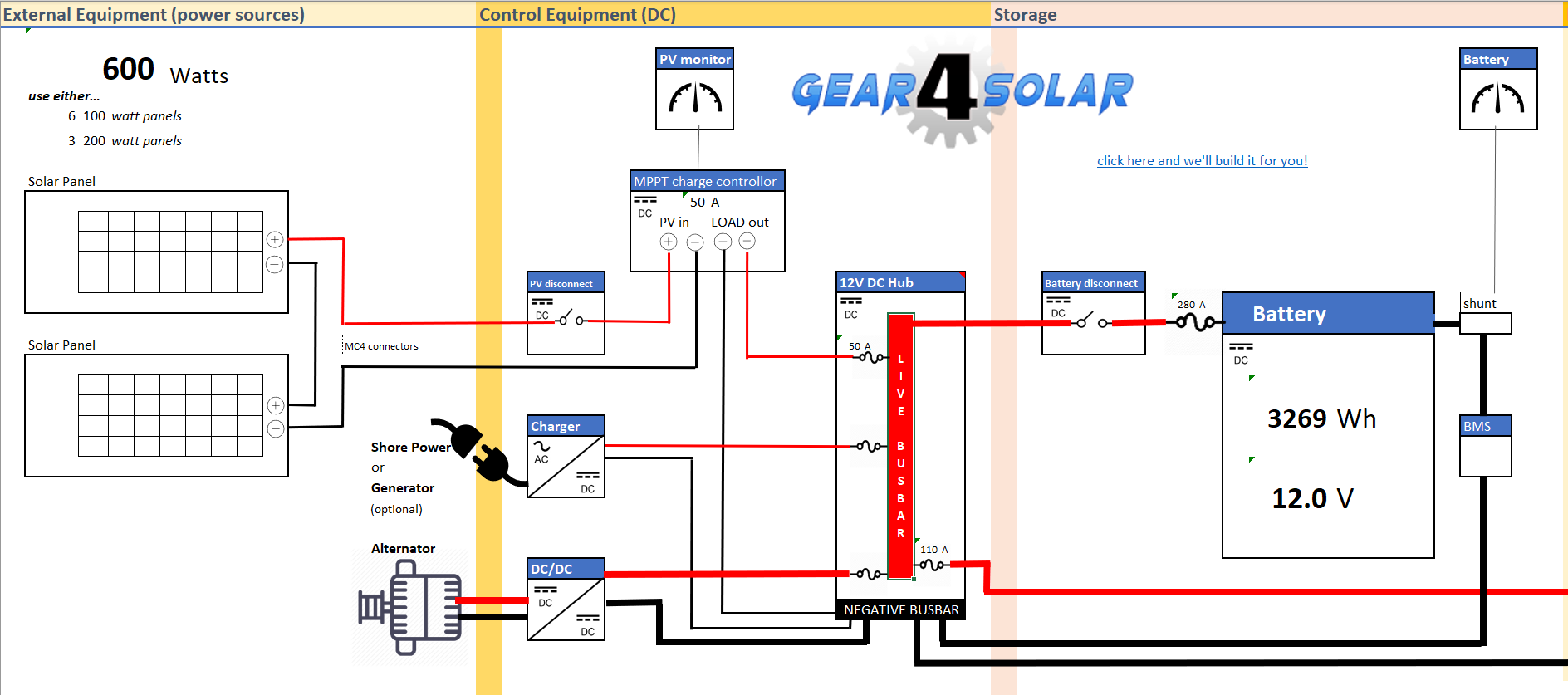
An off-grid solar system allows you to generate your own electricity from the sun, without relying on the grid. However, designing and installing such a system can be complex, requiring a thorough understanding of the electrical components and wiring involved. In this article, we will explore the concept of off-grid solar system wiring diagrams and provide a detailed guide on how to create and implement one.
What is an Off-Grid Solar System?
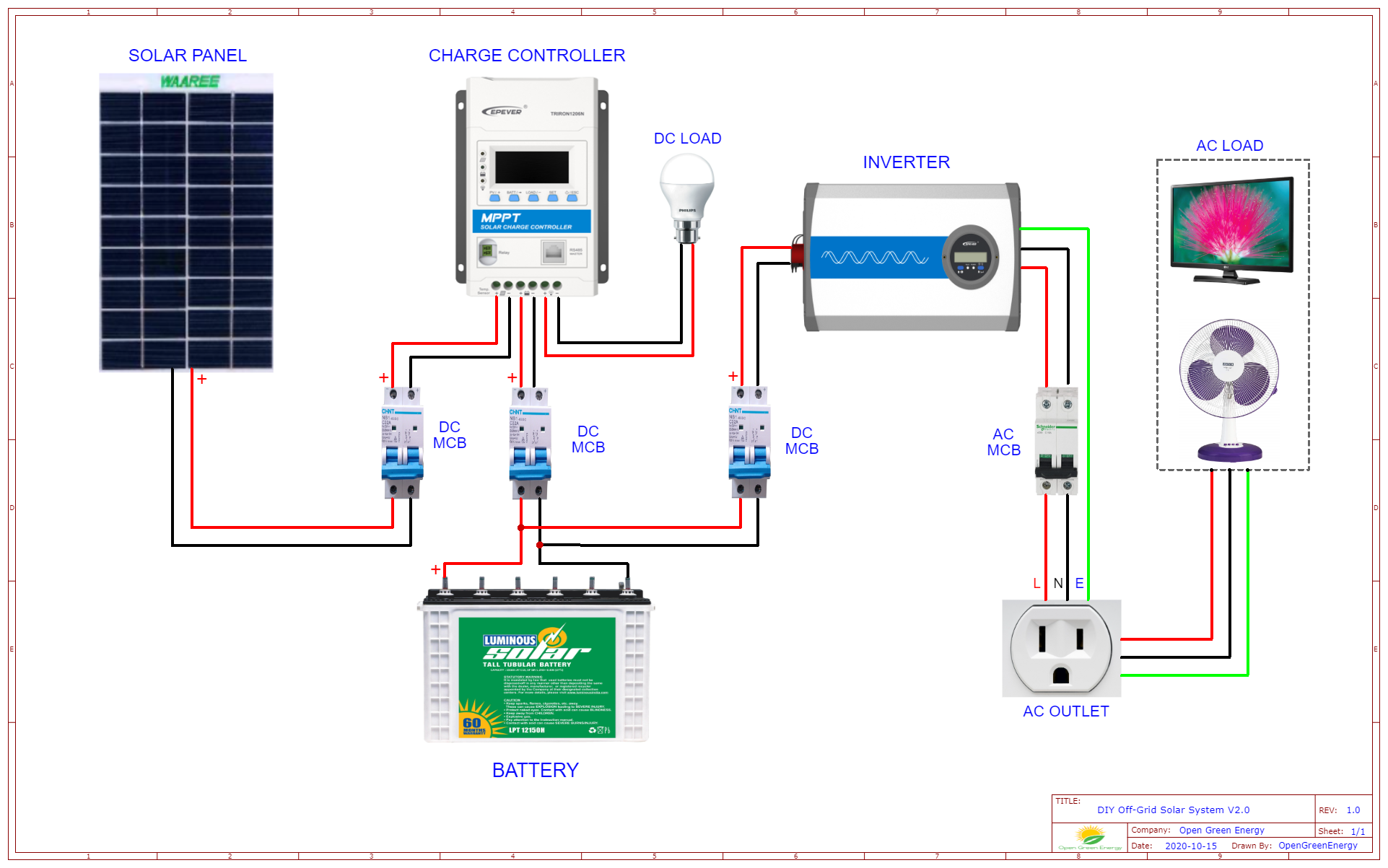
An off-grid solar system is a self-sustaining electrical system that generates power from solar panels, stores excess energy in batteries, and provides power to electrical loads without connecting to the grid. The system consists of several key components:
- Solar Panels: These convert sunlight into electrical energy.
- Charge Controller: Regulates the flow of energy from the solar panels to the batteries.
- Batteries: Store excess energy generated by the solar panels for later use.
- Inverter/Charger: Converts DC power from the batteries to AC power for electrical loads.
- Electrical Loads: Devices that consume electricity, such as lights, appliances, and electronics.
Why is a Wiring Diagram Important?

A wiring diagram is essential for any off-grid solar system installation. It provides a visual representation of the electrical connections between the various components, helping to ensure safe and efficient system operation. A well-designed wiring diagram enables:
- Proper Component Selection: Ensures that the correct components are selected for the system, taking into account factors such as voltage, current, and power ratings.
- System Safety: Identifies potential electrical hazards and provides a clear understanding of how to prevent them.
- Efficient System Operation: Optimizes energy flow and minimizes energy losses.

- Troubleshooting and Maintenance: Facilitates easy identification and repair of issues, reducing system downtime.
Components of an Off-Grid Solar System Wiring Diagram
A typical off-grid solar system wiring diagram includes the following components:
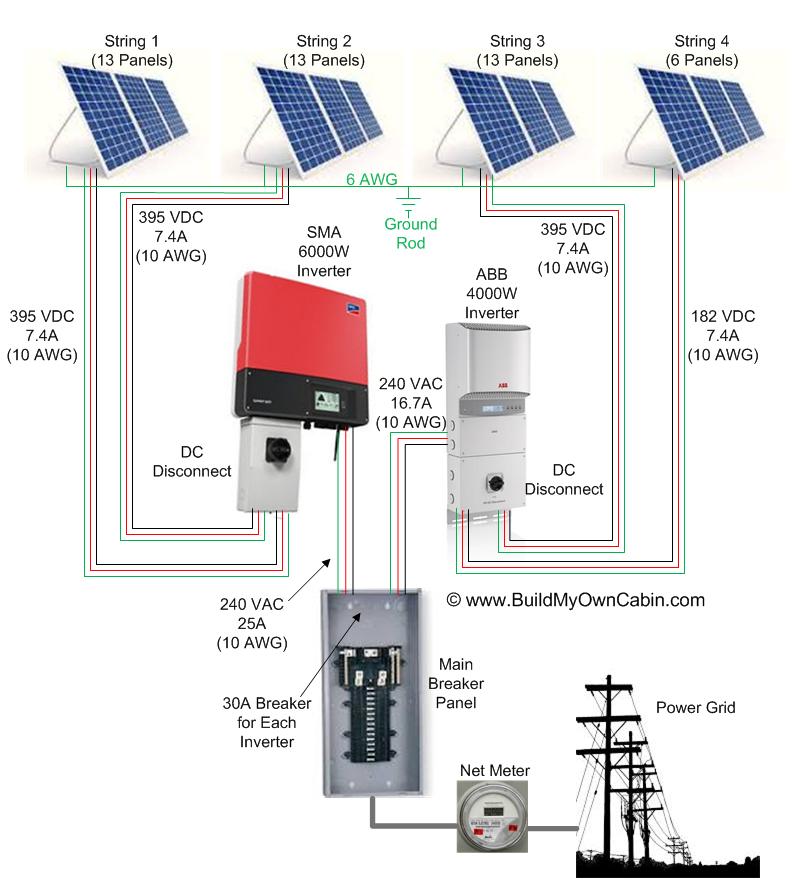
- Solar Panel Array: Represents the solar panels, including the number of panels, series and parallel connections, and total power output.
- Charge Controller: Shows the connection between the solar panel array and the batteries, including the charge controller's input and output terminals.
- Battery Bank: Represents the batteries, including the number of batteries, series and parallel connections, and total capacity.
- Inverter/Charger: Displays the connection between the battery bank and the electrical loads, including the inverter/charger's input and output terminals.
- Electrical Loads: Represents the devices that consume electricity, such as lights, appliances, and electronics.
- Grounding System: Includes the grounding rods, busbars, and connections to ensure a safe and efficient grounding system.
- Fuses and Circuit Breakers: Represents the overcurrent protection devices that prevent damage to the system in case of faults or overloads.
Creating an Off-Grid Solar System Wiring Diagram
To create a wiring diagram for an off-grid solar system, follow these steps:
- Determine the System Requirements: Calculate the total power requirements of the electrical loads, taking into account the daily energy consumption and peak power demand.
- Select the Components: Choose the solar panels, charge controller, batteries, inverter/charger, and electrical loads based on the system requirements.
- Design the System Layout: Determine the physical layout of the system, including the location of the solar panels, battery bank, and electrical loads.
- Create a Block Diagram: Draw a block diagram of the system, showing the major components and their interconnections.
- Add Detailed Connections: Add detailed connections between the components, including wire sizes, colors, and terminal labels.
- Include Grounding and Overcurrent Protection: Add the grounding system and overcurrent protection devices to the diagram.
- Verify and Validate: Verify the diagram against the system requirements and validate it against industry standards and best practices.
Example Off-Grid Solar System Wiring Diagram
Here is an example wiring diagram for a small off-grid solar system:
- Solar Panel Array: 4 x 250W solar panels, connected in series (1000W total)
- Charge Controller: 40A MPPT charge controller, connected to the solar panel array and battery bank
- Battery Bank: 4 x 200Ah deep cycle batteries, connected in series (800Ah total)
- Inverter/Charger: 2000W pure sine wave inverter, connected to the battery bank and electrical loads
- Electrical Loads: 2 x 100W lights, 1 x 500W refrigerator, and 1 x 1000W water pump
- Grounding System: 2 x 8ft grounding rods, connected to the battery bank and electrical loads
- Fuses and Circuit Breakers: 2 x 20A fuses, 1 x 30A circuit breaker
The wiring diagram shows the connections between these components, including the wire sizes, colors, and terminal labels.
Conclusion
Creating a wiring diagram for an off-grid solar system is a crucial step in designing and installing a safe and efficient system. By following the steps outlined in this article, you can create a comprehensive wiring diagram that ensures proper component selection, system safety, and efficient system operation. Remember to verify and validate your diagram against industry standards and best practices to ensure a reliable and long-lasting off-grid solar system.
Recommendations and Best Practices
When creating an off-grid solar system wiring diagram, keep the following recommendations and best practices in mind:
- Use industry-recognized symbols and notation: Ensure that your diagram uses standard symbols and notation to avoid confusion.
- Include detailed component information: Provide detailed information about each component, including manufacturer, model number, and specifications.
- Use color-coding and labeling: Use color-coding and labeling to identify different wire sizes, colors, and terminal labels.
- Consider future expansion and upgrades: Design your system to allow for future expansion and upgrades, including additional solar panels, batteries, or electrical loads.
- Consult industry experts and resources: Consult industry experts and resources, such as the National Electric Code (NEC) and the International Association of Electrical Inspectors (IAEI), to ensure compliance with safety standards and best practices.
By following these recommendations and best practices, you can create a comprehensive and accurate off-grid solar system wiring diagram that ensures a safe, efficient, and reliable system operation.