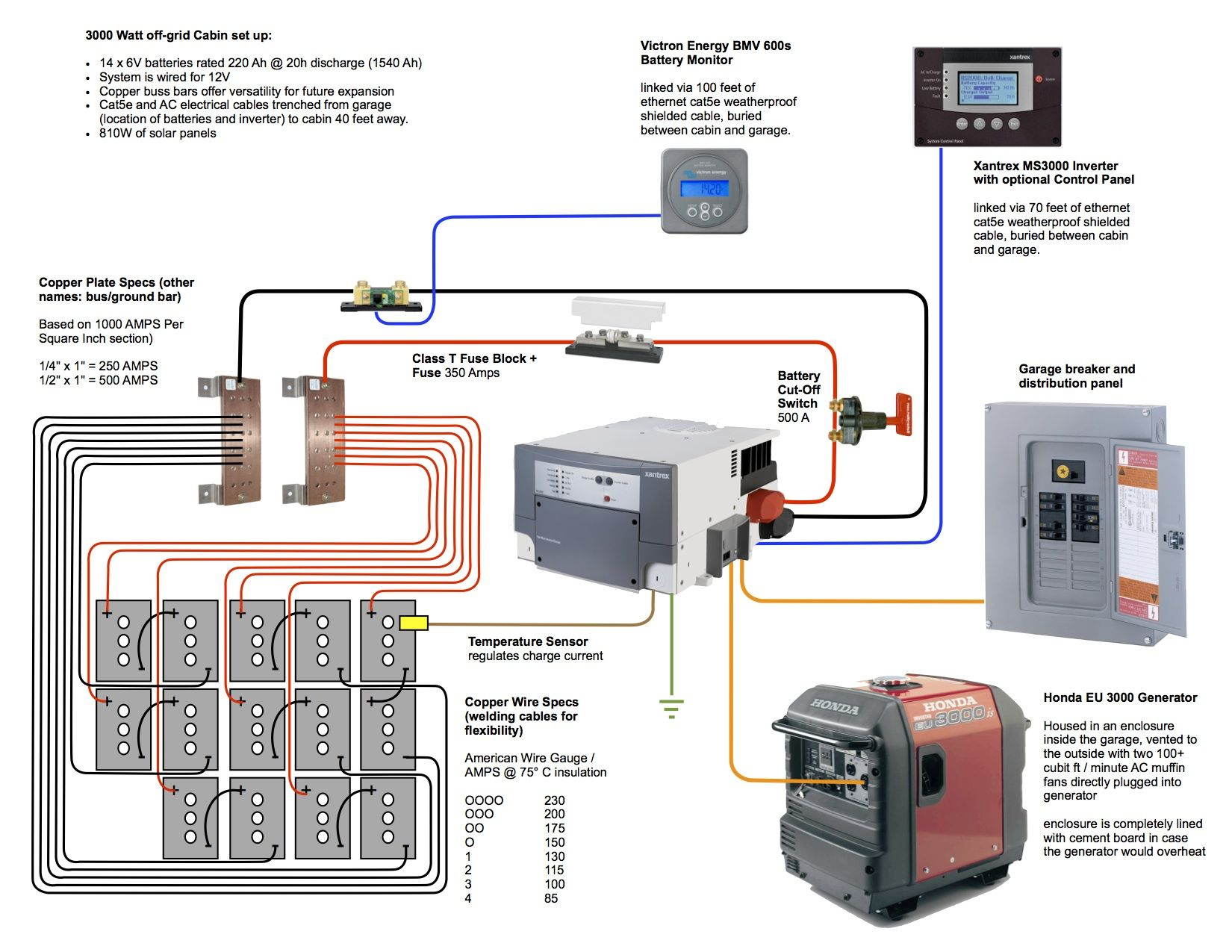
Wiring a DIY off-grid solar system can seem like a daunting task, but with the right knowledge and planning, it can be a rewarding and cost-effective way to harness the power of the sun. In this article, we will walk you through the step-by-step process of wiring a DIY off-grid solar system, covering the essential components, system design, and safety considerations.
Understanding the Components of a DIY Off-Grid Solar System
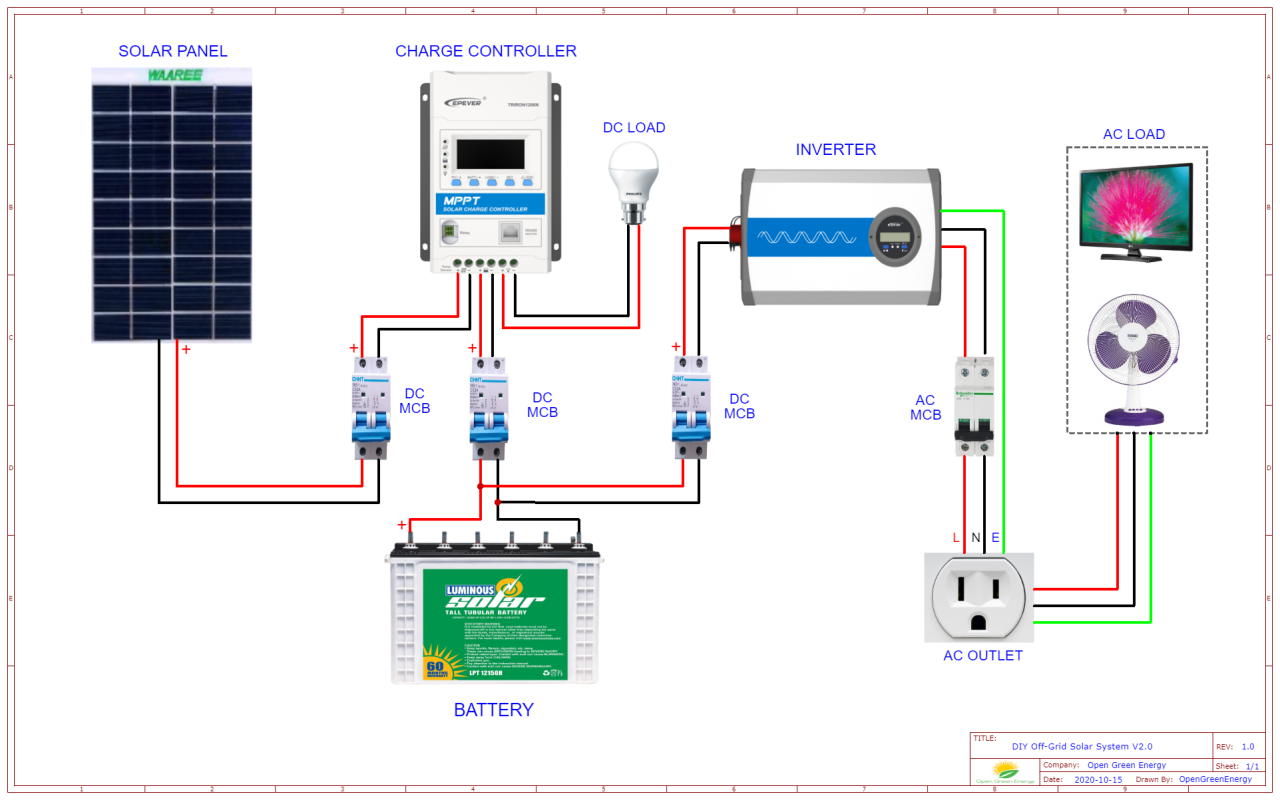
Before we dive into the wiring process, it's essential to understand the components of a DIY off-grid solar system. The main components include:
- Solar Panels: These are the photovoltaic (PV) panels that convert sunlight into electrical energy.
- Charge Controller: This device regulates the flow of energy from the solar panels to the battery bank, preventing overcharging and ensuring a safe charging process.
- Battery Bank: This is a group of deep cycle batteries that store excess energy generated by the solar panels during the day for use at night or during periods of low sunlight.
- Inverter/Charger: This device converts the DC power from the battery bank into AC power for use in the home, and also charges the batteries from an external power source, such as a generator.
- Mounting Hardware: This includes the racks, clamps, and other hardware used to secure the solar panels to the roof or a ground-mounted array.
- Wiring and Connectors: This includes the cables, connectors, and fuses used to connect the various components of the system.
System Design Considerations
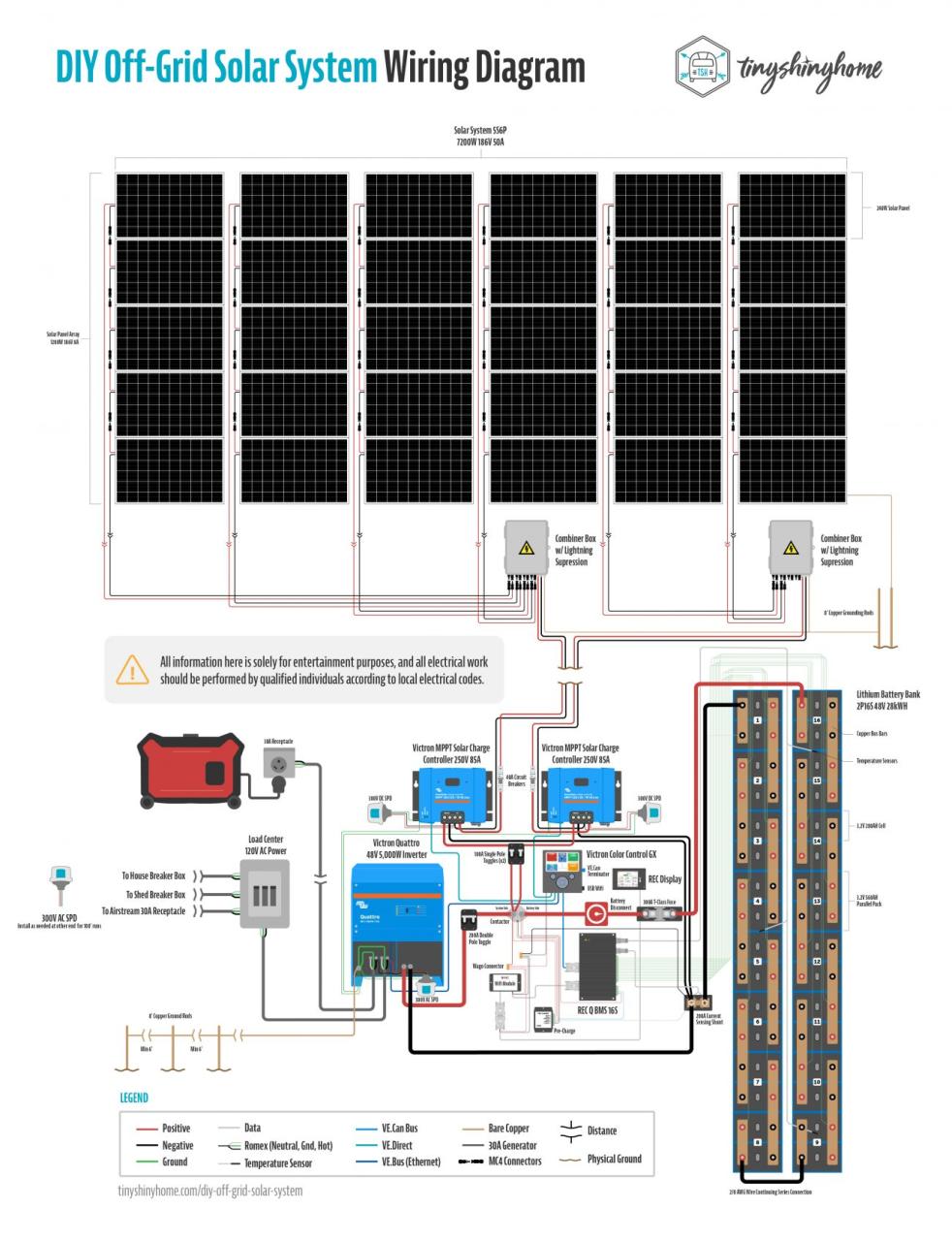
Before wiring your DIY off-grid solar system, it's essential to consider the system design. This includes:
- Determining Your Energy Needs: Calculate your energy requirements based on your appliances, lighting, and other energy-using devices.
- Assessing Your Solar Resource: Determine the amount of sunlight your location receives, and choose a system size that meets your energy needs.
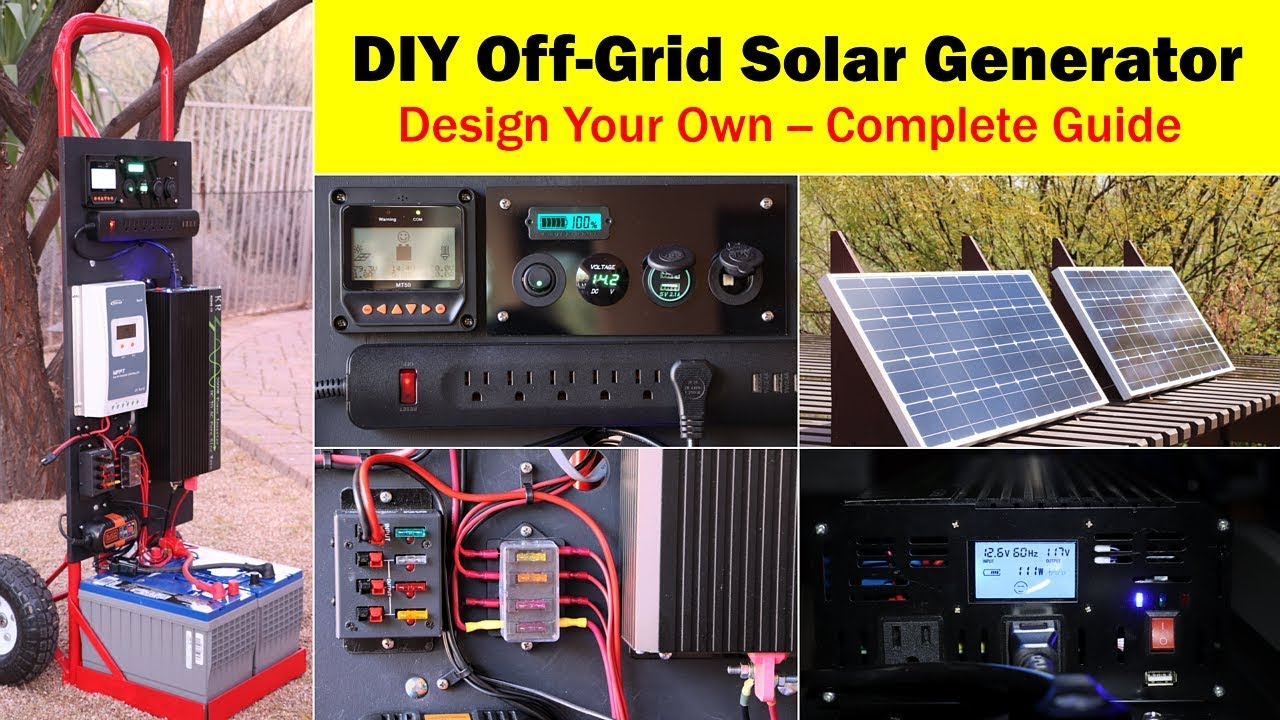
- Choosing a System Configuration: Decide on a system configuration that meets your needs, such as a simple DC system or a more complex AC system with an inverter/charger.
- Selecting Components: Choose components that meet your system design requirements, such as solar panels, charge controllers, battery banks, and inverters/chargers.
Wiring Your DIY Off-Grid Solar System
Now that we've covered the essential components and system design considerations, it's time to start wiring your DIY off-grid solar system. Follow these step-by-step instructions:
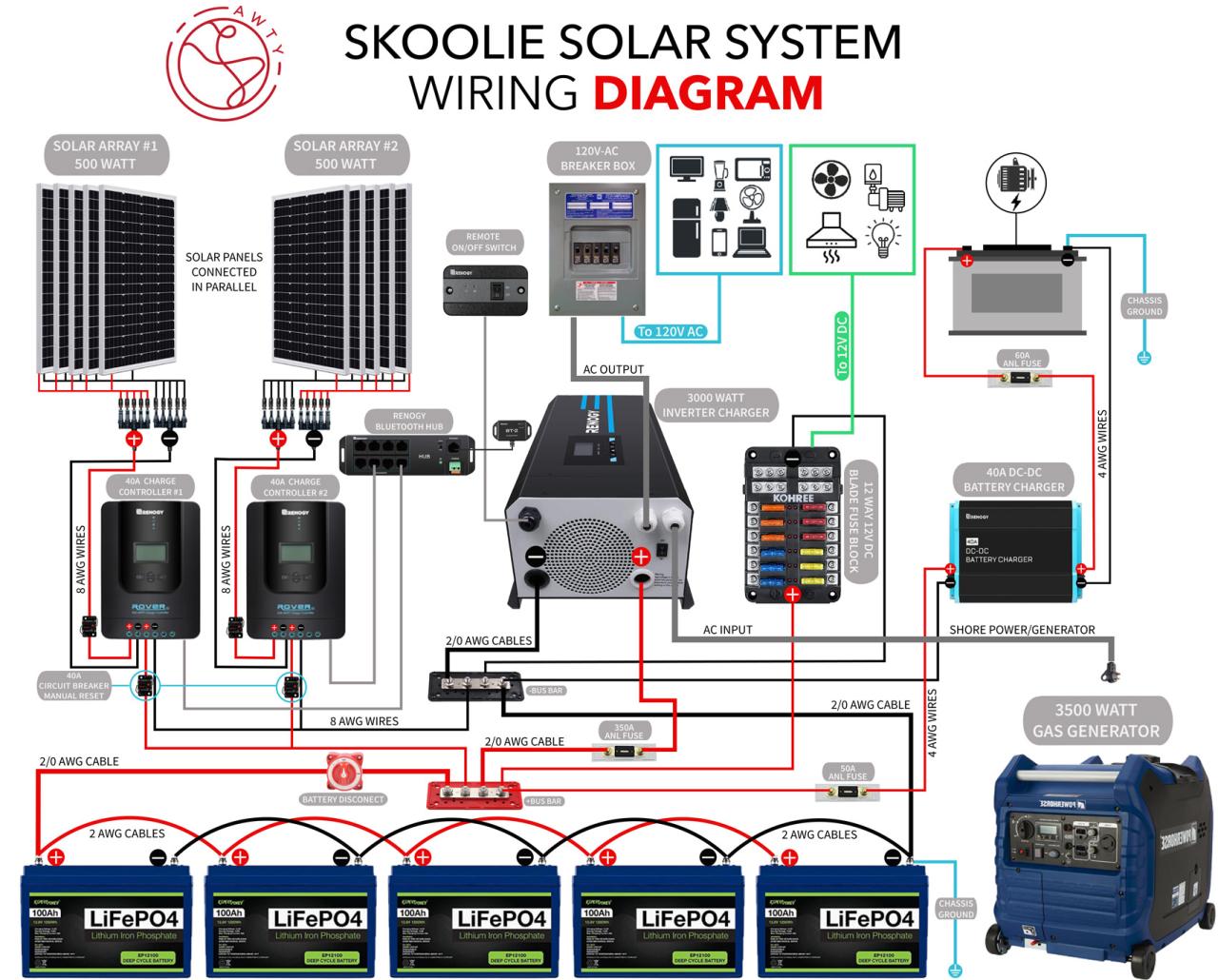
Step 1: Connect the Solar Panels
- Start by connecting the solar panels to the charge controller. Use MC4 connectors or similar connectors to connect the solar panels to the charge controller.
- Ensure the solar panels are securely connected to the mounting hardware, and the wiring is protected from damage.
Step 2: Connect the Charge Controller to the Battery Bank
- Connect the charge controller to the battery bank using the recommended wiring and connectors.
- Ensure the charge controller is configured to charge the battery bank at the correct voltage and current.
Step 3: Connect the Battery Bank to the Inverter/Charger
- Connect the battery bank to the inverter/charger using the recommended wiring and connectors.
- Ensure the inverter/charger is configured to convert the DC power from the battery bank to AC power for use in the home.
Step 4: Connect the Inverter/Charger to the Load Center
- Connect the inverter/charger to the load center, which is the main electrical panel that distributes power to the home.
- Ensure the wiring is sized correctly to handle the maximum power output of the inverter/charger.
Step 5: Add Fuses and Circuit Breakers
- Add fuses or circuit breakers to protect the system from overcurrent conditions.
- Ensure the fuses or circuit breakers are rated for the maximum current output of the system.
Step 6: Test the System
- Test the system to ensure it's operating correctly and safely.
- Monitor the system's performance and make adjustments as needed.
Safety Considerations
When wiring a DIY off-grid solar system, it's essential to consider the following safety considerations:
- Electrical Shock: Ensure all wiring and connections are secure and protected from damage to prevent electrical shock.
- Fire Hazard: Ensure all components, including the solar panels, charge controller, and inverter/charger, are installed and wired correctly to prevent a fire hazard.
- Overcurrent Protection: Ensure the system is protected from overcurrent conditions using fuses or circuit breakers.
- Grounding: Ensure the system is properly grounded to prevent electrical shock and ensure safe operation.
Conclusion
Wiring a DIY off-grid solar system requires careful planning, attention to detail, and a commitment to safety. By following the step-by-step instructions outlined in this article, you can create a safe and efficient DIY off-grid solar system that meets your energy needs. Remember to always follow local electrical codes and regulations, and consult with a professional if you're unsure about any aspect of the installation. With the right knowledge and planning, you can enjoy the benefits of renewable energy and reduce your reliance on the grid.
Additional Resources
For more information on wiring a DIY off-grid solar system, check out the following resources:
- National Electric Code (NEC) Article 690: Solar Electric Systems
- International Association of Electrical Inspectors (IAEI) Guide to Solar Electric Systems
- Solar Energy Industries Association (SEIA) Guide to Solar Electric Systems
- Local electrical codes and regulations
Glossary of Terms
- AC: Alternating Current, a type of electrical current that changes direction periodically.
- DC: Direct Current, a type of electrical current that flows in one direction only.
- Inverter/Charger: A device that converts DC power from the battery bank to AC power for use in the home, and also charges the batteries from an external power source.
- MC4 Connector: A type of connector used to connect solar panels to the charge controller.
- NEC: National Electric Code, a set of standards for electrical wiring and safety.
- SEIA: Solar Energy Industries Association, a trade association that promotes the use of solar energy.
By following the instructions and guidelines outlined in this article, you can create a safe and efficient DIY off-grid solar system that meets your energy needs. Remember to always follow local electrical codes and regulations, and consult with a professional if you're unsure about any aspect of the installation.